

Concrete Floor Repairs
*
Concrete Floor Repairs *
Repairing cracks, holes and damaged areas to restore safer, cleaner and more functional industrial floors.
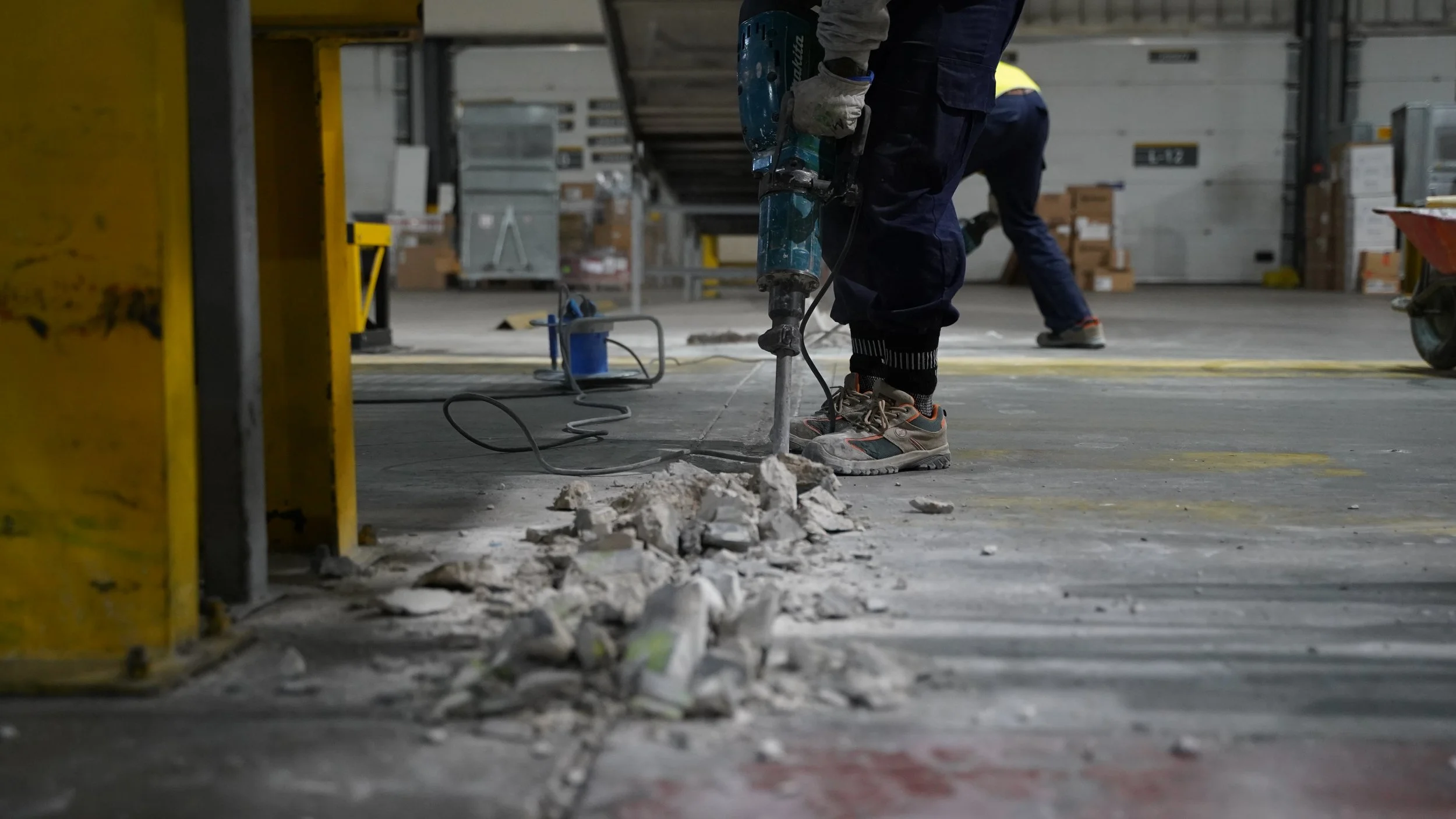
This service covers the full range of repair work carried out on industrial concrete floors: cracks and fissures, joint damage, spalled or delaminated areas, surface defects, and residual holes left by bolts, screws or previous fixtures. Rather than treating each repair type as a separate service, Robust Concrete Flooring assesses and addresses all damage in a single coordinated programme.
Repairs are carried out using materials selected to match the type and behaviour of each defect. The objective is to restore the functionality and safety of the floor and, where required, to prepare it correctly for subsequent polishing, sealing or cleaning.
This service includes .
This service includes .
Crack and fissure repairs
⏺
Surface defect repairs
⏺
Joint repairs
⏺
Repair of spalled or delaminated areas
⏺
Localised concrete floor repairs
⏺
Surface preparation before polishing, sealing or cleaning
⏺
Bolt hole and screw hole repairs
⏺
Upcoming Key benefits
Restored floor integrity
Restored floor integrity And a safe, level surface in the affected areas
Elimination of trip hazards
and risks to wheeled machinery
Prevention of further deterioration
Under continued traffic and use
Correct surface preparation
For any subsequent polishing or sealing
Lower cost than full floor replacement
Works are localised and targeted
minimal disruption
repairs can be sectorised and phased
What the work involves
-
Of all damage: cracks, fissures, joint deterioration, holes and surface defects
-
Cleaning, breaking out unstable material, ensuring sound edges
-
Epoxy resin, polyurethane or cementitious mortar
-
Flush to the surrounding floor surface
-
Verification of results and written report if required
Technical note
Different damage types require different repair materials and methods. Active cracks — those subject to ongoing movement — are filled with flexible polyurethane to accommodate movement without re-cracking. Dormant cracks are repaired with rigid epoxy resin. Spalled or broken areas are reinstated with cementitious or epoxy repair mortars. Anchor holes are cleaned and filled flush to the surface. Damaged joints — including construction joints, expansion joints and saw-cut joints — are repaired to restore clean, stable edges and prevent further deterioration of the surrounding slab. Correct diagnosis of the damage type is the critical first step in any repair programme.
Why it matters
Damage to an industrial concrete floor does not stabilise on its own. Under continued traffic, cracks widen, edges break down and small defects expand into larger failures. Early repair is always less costly than delayed repair, and unrepaired surfaces create daily risk of damage to wheeled equipment and injury to personnel.